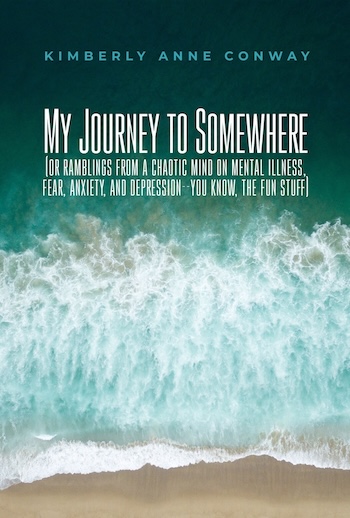
My Journey to Somewhere Reviews
Kirkus Review of My Journey To Somewhere
Kirkus Review Issue: July 15, 2025
Conway looks back at traumatic childhood experiences and discusses moving forward in this intimate memoir.
In her first book, the author reflects on her life, unearthing the motivations underlying patterns of behavior that have exacerbated her lifelong struggles with depression, anxiety, and self-doubt. Conway was born to teenage parents and grew up on a Wisconsin farm in the early 1960s. Two sisters and a brother were born over the next few years and joined the busy household. Horrific childhood events had lifelong effects: At age 6, she was sexually molested by a hired hand on the farm; at a family party, no one listened to her when she tried to alert them that her father’s “around the block” motorcycle ride” had gone awry and he was injured; and she felt responsible for a neighboring playmate who was hit by a car after leaving their house. As a result, she felt that she didn’t matter and was not a deserving person, leading her to focus on helping others at the expense of her own needs. In the author’s late teens, a sexual assault by an uncle, who had a glorified reputation in the family, added self-blame and anger at her own body to her depression. Conway states that she wrote this book “to put my life passengers—depression, anxiety, fear, self‐loathing, and unworthiness—in the trunk of the vehicle. I want to stop letting them steer or be the back seat drivers.” The nonchronological progression of chapters can be confusing, but this reflects her reality of “writing this as a person who struggles with mental illness on a daily basis.” The author’s description of how an incident of unwanted touching that occurred many years after her uncle’s assault sent her “down a rabbit hole [she] hadn’t been in for a while” clearly illustrates how, for a victim of sexual assault, the past is never past. Readers, especially those who have had similar experiences, will find her willingness to describe her progress brave and heartening.
A memoir affirming that it is never too late to face childhood trauma and progress to self-acceptance.
Review of My Journey To Somewhere
Vanessa Harrelson Keck
May 20, 2025
5 out of 5 stars
Reading My Journey to Somewhere felt like listening to a close friend share their heart—raw, honest, and deeply human. Kimberly Anne Conway doesn’t just tell her story—she lays it bare. Through setbacks, depression, anxiety, and fear, she explores how mental illness shows up in everyday life and quietly shapes the way we move through the world.
What really stayed with me was her willingness to go back to the beginning—not to relive the pain, but to understand it. That part hit hard. Her reflections are full of quiet strength, and the way she writes about heaviness, silence, and hope makes you feel every word. This book wasn’t her original plan—it showed up alongside her novel—but it became something powerful in its own right.
Kimberly opens up a much-needed conversation about mental illness, offering comfort to those who live with it and insight to those who love someone who does. If you’ve ever felt alone, overwhelmed, or unsure of how to explain what’s going on inside, this book is a gentle reminder that you’re not broken—and you’re definitely not alone.
Review of My Journey To Somewhere
Post by Justin Christensen » 16 Jan 2025, 10:55
[Following is an official OnlineBookClub.org review of “My Journey To Somewhere” by Kimberly Anne Conway.]
5 out of 5 stars
My Journey to Somewhere by Kimberly Anne Conway could be described as a primarily autobiographical contemplation of life, abuse, and mental illness. I say “could be” because even after reading it, I’m not convinced that this book should be nailed to a single genre. Conway frames it as “ramblings from a chaotic mind,” and I admittedly don’t know the author so I can’t really argue that their mind is not chaotic. I will argue vehemently, however, that this book is definitely not filled with ramblings. Rather, it is filled with thoughts and memories. These may not always seem to flow nicely into one another in a neat little line, but they do paint a very poignant picture of the person writing them down.
One of the things I loved the most about this book was how it began with a brief commentary on who the author is now (or at least, at the time it was written). A lot of autobiographical-type books start way back in history, which sounds very logical. It is somehow much more gripping to begin with an introduction to the current version of the person telling their story—to have something of a jumping-off point before heading into their past. This is the beginning of the non-linear narrative that I found myself falling in love with as I read Conway’s story. Oh sure, she does give context from her beginnings early on, but this book does not progress ploddingly through her life one decade at a time. It is more dynamic than that—spinning the reader through Conway’s emotions and memories as she weaves together the threads of a heartbreaking, beautiful, vibrant life.
This book is not a light read. The early chapters are heavy with traumatic memories and experiences and explanations of how those events contributed to a lifelong struggle with fear, anxiety, and depression. The later chapters are heavy with emotion. It was hard, at first, to understand why I was crying three quarters of the way through the book, reading a two-page chapter entitled “The Knot” where the author simply describes feeling happy about their progress. This book did that to me a lot, though. Conway’s positivity and optimism, in defiance of her struggles, are extremely moving. Be sure you have tissues with you while you read.
It sounds like this is the first book Conway has finished and published, and there are some signs of that visible in the editing. Nothing major, and not nearly enough to distract me from my overwhelming emotional response. In writing My Journey to Somewhere, Conway has bared her soul. I simply refuse to rate such a courageous act as anything less than perfect, and I would not have her change a thing. I give this book five out of five stars. It is inspiring, and I think it would be particularly useful for would-be authors and anyone who has ever struggled with depression or other mental health challenges.